High-efficiency MERV filters are a game changer for your home’s air quality. With MERV ratings ranging from 8 to 16, they trap a wide variety of allergens, dust, and even some bacteria, helping you breathe easier. Whether you have pets, allergies, or just want cleaner air, these filters pack a powerful punch for your HVAC system.
High-Efficiency MERV Filters (MERV 8–16)
Upgrade your air quality with these high-efficiency filters designed to trap dust, pollen, and allergens effectively
Product List
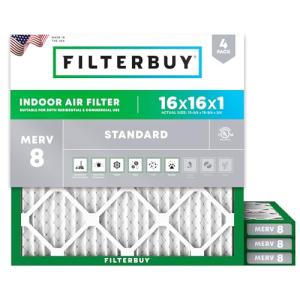
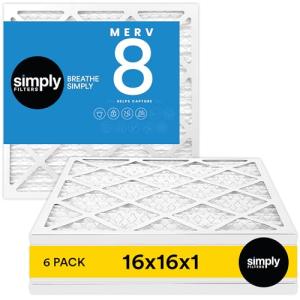
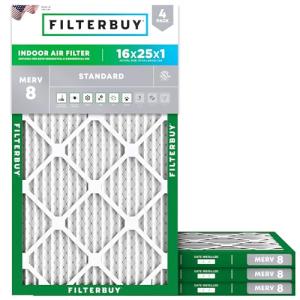
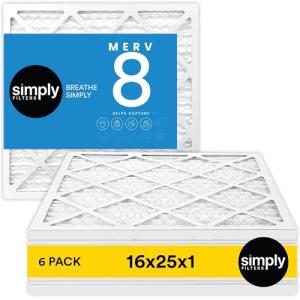
16x25 MERV 8 Air Filters, 6 Pack
Simply
Product Review Score
4.16 out of 5 stars
67 reviews$40.97 $38.97
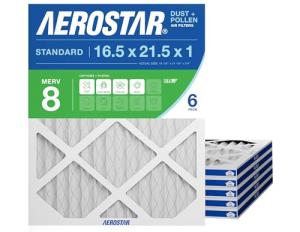
Aerostar MERV 8 Filters - 6 Pack
Aerostar
Product Review Score
4.61 out of 5 stars
177 reviews$45.54
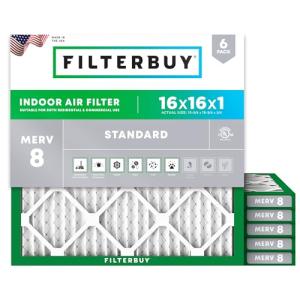
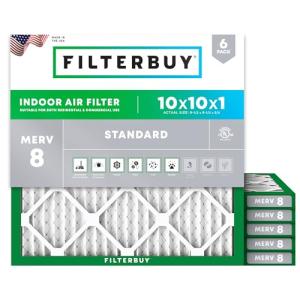
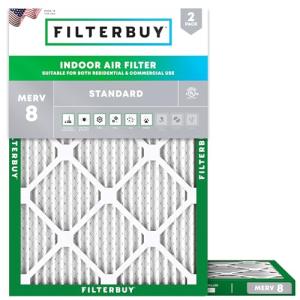
Filterbuy 10x12x1 MERV 8 Filters
Filterbuy
Product Review Score
4.74 out of 5 stars
193 reviews$33.98
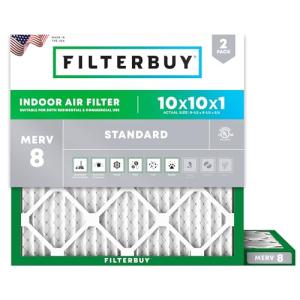
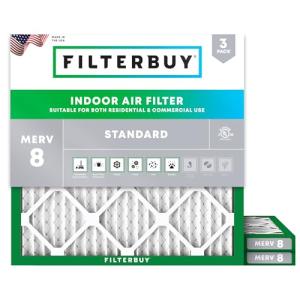
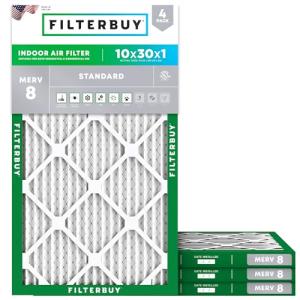
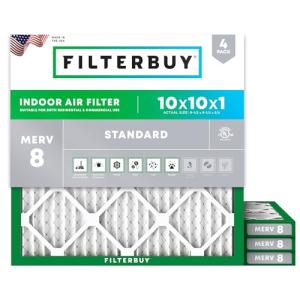
10x10x1 MERV 8 Filters (4-Pack)
Filterbuy
Product Review Score
4.36 out of 5 stars
83 reviews$29.96
What Are MERV Filters and Why Do Ratings Matter?
MERV stands for Minimum Efficiency Reporting Value, a standardized rating system developed by the American Society of Heating, Refrigerating and Air-Conditioning Engineers (ASHRAE). It measures how effectively an air filter captures particles of different sizes as air passes through it. The scale runs from 1 to 20, with higher numbers indicating better filtration performance. High-efficiency MERV filters in the 8–16 range strike the perfect balance between powerful particle capture and practical airflow, making them ideal for most residential and light commercial HVAC systems.
Unlike low-rated filters (MERV 1–4) that only snag large debris like dust bunnies, or ultra-high HEPA filters (MERV 17+) that can restrict airflow in standard home units, MERV 8–16 filters deliver robust protection without forcing your blower motor to work harder. This means lower energy bills, quieter operation, and longer equipment life. If you’re searching for “high-efficiency MERV filters” or “best MERV 13 air filters for home,” you’re already on the right track—these ratings target the particles that matter most to everyday air quality.
Breaking Down MERV 8–16: Which Rating Is Right for You?
Each step up the MERV ladder brings noticeable improvements in what your filter can trap. Here’s a clear, practical breakdown to help you understand the differences:
MERV 8 Filters: Solid Everyday Protection
MERV 8 high-efficiency filters are the entry point into serious filtration. They capture over 70% of particles between 3–10 microns, including pollen, dust mites, and many mold spores. Perfect for standard homes without severe allergy issues, these filters keep your ducts cleaner and reduce visible dust on surfaces. If your main concern is basic household dust and pet hair, a MERV 8 pleated filter offers excellent value and easy compatibility with most furnaces and AC units.
MERV 9–10: Stepping Up for Better Allergen Control
Moving into MERV 9 and 10 territory, you gain efficiency against particles as small as 1–3 microns. These filters trap 60–80% of finer dust, pet dander, and smoke particles. Homeowners with mild allergies or those living in dusty urban areas love MERV 10 filters because they noticeably reduce sneezing and eye irritation without compromising airflow. Many premium residential HVAC systems perform best with these mid-range high-efficiency MERV filters.
MERV 11–13: Premium Residential Performance
This is where high-efficiency MERV filters shine for most families. MERV 13 filters, in particular, capture over 90% of 1–3 micron particles and a significant portion of sub-micron contaminants like bacteria and virus carriers. They’re fantastic for homes with pets, kids, or anyone dealing with asthma. Searching for “MERV 13 furnace filters” or “high-efficiency pleated air filters” will lead you to options that balance superior filtration with energy-efficient operation. MERV 11–12 serve as strong intermediates for those who want better-than-average air quality without jumping to commercial-grade specs.
MERV 14–16: Hospital-Grade Filtration for Demanding Spaces
At the top of this range, MERV 14–16 filters deliver exceptional performance, trapping 95%+ of particles down to 0.3 microns. These are the go-to high-efficiency MERV filters for commercial buildings, medical offices, schools, and high-end homes with severe allergy sufferers. MERV 16 filters approach HEPA-level protection while still fitting standard HVAC slots, making them ideal for anyone prioritizing the cleanest possible air. They excel at removing smoke, fine smog particles, and airborne pathogens—critical in today’s health-conscious world.
Key Benefits of Upgrading to High-Efficiency MERV 8–16 Filters
The advantages go far beyond simple dust collection. Families report fewer allergy symptoms, better sleep, and even reduced doctor visits after switching to these filters. Here’s why they make such a difference:
First, superior particle capture means dramatically improved indoor air quality. High-efficiency MERV filters (especially MERV 12+) remove up to 95% of common allergens, mold, and bacteria that basic filters let through. This is especially valuable for households with children, elderly members, or respiratory conditions.
Second, your HVAC system stays cleaner longer. By preventing dust buildup on coils and fans, these filters reduce maintenance costs and extend the life of your expensive heating and cooling equipment. Many users see energy savings of 5–15% because the system doesn’t have to strain against clogged components.
Third, better odor and smoke control. MERV 13–16 filters trap volatile organic compounds (VOCs) and tobacco or wildfire smoke particles that lower-rated filters simply miss, leaving your home smelling fresher.
Fourth, quieter and more consistent airflow. Unlike restrictive high-MERV options that can cause pressure drops, well-designed MERV 8–16 pleated filters maintain excellent static pressure ratings, so your blower runs smoothly and efficiently.
Finally, long-term cost savings. While premium high-efficiency MERV filters cost a bit more upfront, they last longer (often 3–6 months versus 1–3 for cheap filters) and reduce energy bills and repair calls. It’s an investment that pays for itself quickly.
Where High-Efficiency MERV Filters Make the Biggest Impact
These filters aren’t just for homes. Commercial facilities, offices, retail spaces, and healthcare environments rely on MERV 8–16 ratings to meet air quality standards and keep occupants comfortable. In homes with central air, they protect against outdoor pollutants sneaking indoors. Pet owners swear by MERV 11+ filters for controlling dander and litter dust. Apartment dwellers in high-pollution cities use them to combat urban smog infiltration. Even workshops and garages benefit from MERV 14–16 options to trap fine sawdust and chemical particles.
Seasonal changes highlight their value too. Spring pollen, summer mold, fall ragweed, and winter dry-air dust—all are handled efficiently by the right MERV-rated filter. If you live in an area prone to wildfires or heavy traffic, stepping up to MERV 15 or 16 provides peace of mind during smoke events.
Types of High-Efficiency MERV Filters Available Today
Modern manufacturing has created incredible variety in MERV 8–16 filters. Pleated synthetic media is the most popular choice because it offers high surface area for better capture without high resistance. Electrostatic filters add a charge that attracts particles like a magnet. Some include activated carbon layers for odor control, while others feature antimicrobial treatments to inhibit mold growth on the filter itself.
Standard sizes fit most residential return grilles and furnace cabinets—16x20, 20x25, 24x24, and custom dimensions for commercial units. Depth options (1-inch, 2-inch, 4-inch, and 5-inch) allow deeper pleats for even higher efficiency and longer life. Many brands now offer recyclable or low-VOC frames, appealing to eco-conscious buyers looking for sustainable high-efficiency MERV filters.
How to Choose the Best MERV Filter for Your HVAC System
Not every system can handle the highest ratings. Start by checking your manufacturer’s recommendations—most residential units handle up to MERV 13 comfortably, while commercial systems often support MERV 16. Measure your filter slot size accurately (length, width, depth) and consider your specific needs: severe allergies point to MERV 13+, pets or smokers to MERV 11+, general home use to MERV 8–10.
Look for features like reinforced frames that prevent bending, deep pleats for maximum media area, and low initial resistance ratings. Read reviews mentioning real-world performance in your climate. If you’re unsure, consult an HVAC professional—they can test your system’s static pressure and recommend the optimal high-efficiency MERV filter.
Easy Installation and Smart Maintenance Tips
Replacing your filter is one of the simplest DIY home projects. Turn off your HVAC system, slide out the old filter, note the airflow direction arrow, and insert the new high-efficiency MERV filter the same way. Check your filter every 30 days—more often if you have pets or live in dusty areas—and replace when it looks dirty or at the manufacturer’s interval.
Pro tip: Keep spares on hand so you never run with a clogged filter. Many suppliers offer subscription services for automatic delivery of your preferred MERV 8–16 size, taking the guesswork out of maintenance. Proper care ensures you enjoy maximum efficiency and air-cleaning power for months.
High-Efficiency MERV Filters vs. Other Air Purification Options
While whole-house air purifiers and portable HEPA units have their place, nothing beats a properly rated MERV filter at the source—your HVAC system. It treats every cubic foot of air that circulates through your home multiple times per hour. MERV 8–16 filters offer better whole-home coverage than single-room devices and cost far less to operate than standalone purifiers.
Compared to basic fiberglass filters, the jump to high-efficiency pleated MERV options is dramatic. Versus true HEPA (MERV 17+), MERV 13–16 provide nearly the same particle capture with far less strain on residential equipment. Many homeowners combine a quality MERV filter with occasional portable purifier use for ultimate results.
Health, Environmental, and Economic Advantages
Cleaner air isn’t a luxury—it’s essential. Studies consistently show that reducing indoor particulates lowers allergy and asthma triggers, improves cognitive function, and supports better overall wellness. High-efficiency MERV filters also contribute to greener living by extending HVAC equipment life and reducing energy consumption, lowering your carbon footprint.
Economically, the upfront cost of a pack of premium MERV 13 filters quickly offsets itself through energy savings and fewer service calls. Businesses notice improved employee productivity and fewer sick days when air quality improves. It’s a win across the board.
Common Questions About High-Efficiency MERV 8–16 Filters
Will a higher MERV rating damage my HVAC system? Not if you choose within your system’s capacity. Most modern units handle MERV 13 easily; higher ratings may require professional assessment.
How often should I change MERV 8–16 filters? Every 3–6 months for standard use, more frequently in high-dust or pet homes.
Are these filters good for pet owners? Absolutely—MERV 11+ excel at capturing pet dander and hair.
Do MERV filters remove viruses? Higher ratings (MERV 13+) capture many virus-carrying droplets effectively, especially when combined with good ventilation.
Can I wash reusable MERV filters? Most high-efficiency versions are disposable for maximum performance, though some electrostatic models allow gentle cleaning.
Ready to Upgrade Your Indoor Air Quality?
High-efficiency MERV filters in the MERV 8–16 range represent the sweet spot of performance, compatibility, and value for today’s homes and businesses. Whether you choose a reliable MERV 8 for everyday protection or a powerhouse MERV 16 for maximum allergen defense, you’re making a decision that pays dividends in health, comfort, and efficiency every single day.