Ready to enjoy cleaner water and lower bills? Browse our full selection of spin down sediment filters and trappers in every size, style, and feature set. Your pipes, appliances, and family will thank you.
Spin Down Sediment Filters & Trappers
Product List
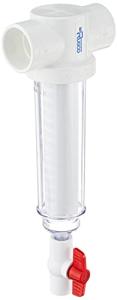
Rusco 1-1/2-250-F Polyester Screened Spin-Dow...
Rusco
Product Review Score
4.4 out of 5 stars
136 reviews$59.39
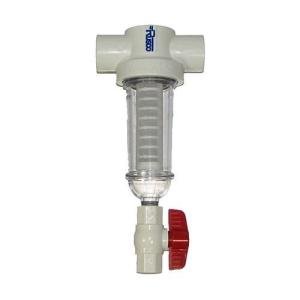
Rusco/Vu-Flow 1" 100 Mesh PVC Spin Down Sedim...
Rusco
Product Review Score
4.61 out of 5 stars
63 reviews$49.59
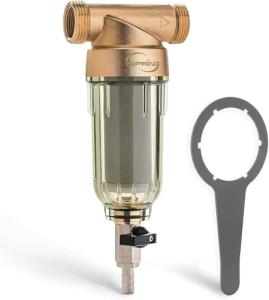
iSpring WSP-50 Spin Down Sediment Water Filte...
Ispring
Product Review Score
4.11 out of 5 stars
92 reviews$65.99 $52.77
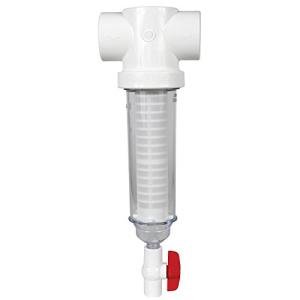
Rusco/Vu-Flow 2" 100 Mesh Spin Down Sediment...
Rusco
Product Review Score
4.82 out of 5 stars
158 reviews$120.00 $92.65
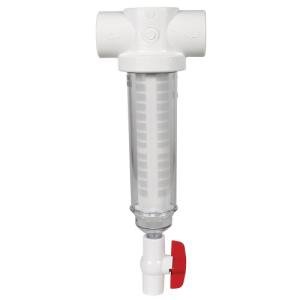
Rusco 1-12-100-F Spin-Down Sediment Filter wi...
Rusco
Product Review Score
4.41 out of 5 stars
157 reviews$55.88
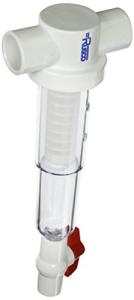
Rusco 1-100ST-F Polyester Screen Sediment Tra...
Rusco
Product Review Score
4.25 out of 5 stars
10 reviews$71.01 $65.17
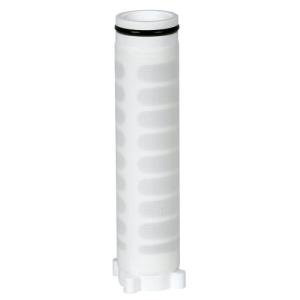
Rusco Polyester Filter Screens for Spin Down...
Rusco
Product Review Score
4.52 out of 5 stars
209 reviews$16.23
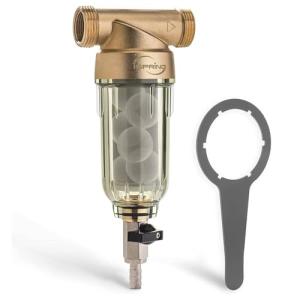
iSpring WSP-50SL Reusable Whole House Spin Do...
Ispring
Product Review Score
4.71 out of 5 stars
153 reviews$79.99 $58.99
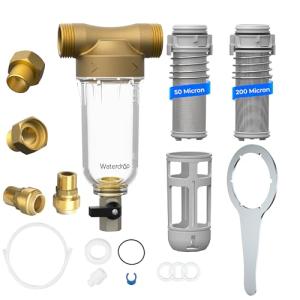
Waterdrop Spin Down Sediment Filter, Backwash...
Waterdrop
Product Review Score
4.84 out of 5 stars
168 reviews$65.99
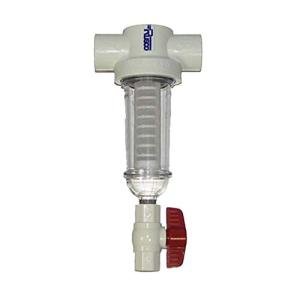
Rusco 1-1/2" Spin Down Separator Sand/ Sedime...
Rusco
Product Review Score
4.63 out of 5 stars
41 reviews$60.18 $56.46
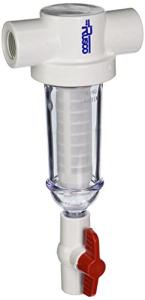
Rusco 34-100-F 34-100-F Rusco 3/4-100-F Polye...
Rusco
Product Review Score
4.81 out of 5 stars
151 reviews$53.76 $46.73
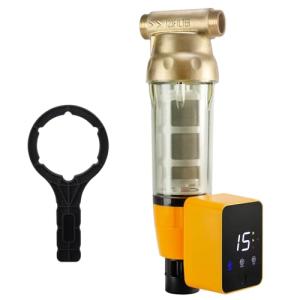
iSpring WSP50ARB Spin Down Sediment Water Fil...
Ispring
Product Review Score
4.22 out of 5 stars
32 reviews$227.99
What Are Spin Down Sediment Filters and Trappers?
Spin down sediment filters, also called sediment trappers or centrifugal sediment separators, are specialized water filtration devices designed to capture and remove sand, silt, rust, dirt, and other heavy particles before they reach your plumbing, water heater, softener, or other appliances. Unlike traditional cartridge filters that trap debris in a disposable element, spin down models use centrifugal force to spin incoming water at high speed. The heavier sediment gets flung outward and drops into a collection chamber at the bottom, while clean water continues flowing upward and out to the rest of your system.
Most units feature a clear bowl or sight glass so you can literally watch the sediment collect in real time. Many include a built-in stainless-steel mesh screen (typically rated between 100 and 500 microns) that catches anything the spin action misses. The best part? You don’t have to replace cartridges constantly. Just open the bottom flush valve every few months—or when the bowl looks full—and the trapped debris washes away in seconds.
These filters are built tough for high-flow residential and light commercial use. You’ll find them in 1-inch, 1.5-inch, and 2-inch inlet/outlet sizes to match everything from small homes to large ranches or irrigation setups. Materials range from high-impact plastic bowls with brass heads to all-stainless-steel models built for extreme pressure or corrosive water.
How Do Spin Down Sediment Filters Actually Work?
The science is beautifully simple and incredibly effective. Water enters the filter through a tangential inlet that creates a powerful vortex—think of it like a mini tornado inside the chamber. Centrifugal force pushes heavier particles (sand, rust flakes, calcium bits) outward against the walls and downward into the collection bowl. The cleaner, lighter water rises through the center and exits the top outlet, heading straight to your home’s water lines.
That stainless-steel screen acts as a final safety net, catching any particles that didn’t quite settle. Because the water is constantly spinning, the screen stays cleaner longer than in standard filters, which means less frequent cleaning and higher sustained flow rates. Some advanced models even include automatic flush timers or pressure sensors that purge sediment without you lifting a finger.
The result is a pre-filtration step that dramatically extends the life of every downstream filter, softener, reverse-osmosis unit, or appliance in your home. It’s like giving your entire plumbing system a bodyguard that never takes a day off.
Key Benefits of Spin Down Sediment Filters and Trappers
Let’s talk real advantages that homeowners notice immediately. First and foremost, you get noticeably cleaner water right away. Showers feel better, ice cubes look clearer, and your coffee maker stops clogging with grit. Appliances last longer because sediment no longer scratches pump impellers, fouls valves, or reduces efficiency in water heaters and dishwashers.
Cost savings add up fast. Traditional cartridge filters can cost $20–$50 every 3–6 months. A quality spin down unit pays for itself in under a year because you only flush it instead of replacing anything. Many users report cutting their overall filter maintenance costs by 70–80%.
Water pressure stays strong longer. Because these filters handle high flow rates (up to 50–100+ gallons per minute depending on size), you won’t experience the pressure drop common with clogged cartridge housings. That’s especially important for homes with multiple bathrooms running showers and laundry simultaneously.
Eco-friendly bonus: fewer disposable cartridges means less plastic waste heading to landfills. And because you can flush sediment straight to a drain or outside, you’re not constantly handling messy, soggy filter elements.
Finally, peace of mind. If you live on well water or in an area with aging municipal pipes, you know sediment is coming. A spin down trapper acts as your first line of defense, protecting everything else and giving you visual proof that it’s working every time you glance at the clear bowl.
Types of Spin Down Sediment Filters Available Today
Not all spin down filters are created equal, and choosing the right one depends on your water source and usage. Here’s a quick breakdown of the main categories you’ll encounter:
Manual Flush Models: The most popular and affordable option. You simply open a ball valve at the bottom every few weeks or months to blast out collected sediment. Perfect for most residential wells and city water with moderate sediment loads.
Automatic Flush Systems: These connect to a timer or pressure differential switch and purge themselves automatically. Ideal for busy households, vacation homes, or commercial properties where regular manual flushing isn’t practical.
High-Flow Industrial Grades: Larger 2-inch and 3-inch units built for farms, greenhouses, irrigation systems, or multi-unit buildings. Some handle flow rates over 150 gallons per minute while still removing particles down to 50 microns.
Screenless Centrifugal Separators: Pure spin-down designs without any mesh screen. These rely entirely on vortex action and are great for very high sediment loads where screens would clog too quickly.
Hybrid Units: Combine spin-down action with finer cartridge stages or even UV treatment in one compact housing. Great for people who want a single-point solution.
Whatever your situation, there’s a spin down sediment trapper engineered to match it perfectly.
Choosing the Right Spin Down Sediment Filter for Your Home
Selecting the perfect unit isn’t complicated if you ask yourself a few key questions. How much sediment is in your water? Test your supply or check for visible sand/rust in your current aerators and fixtures. What’s your peak flow rate? A family of four with multiple bathrooms usually needs at least a 1.5-inch model. Do you want manual or automatic flushing? Budget-friendly manual units work great, but automatic versions save time.
Look for solid construction—brass or stainless heads, thick-walled bowls, and easy-to-reach drain valves. Pressure rating should be at least 150 PSI to handle city water spikes. Micron rating on the screen matters too: 100–200 microns is ideal for most homes, while 500-micron screens work for heavy irrigation where ultra-fine filtration isn’t needed.
Don’t forget installation space. These units are taller than standard filter housings because of the collection bowl, so measure your available height before ordering.
Common Applications for Spin Down Sediment Traps
The versatility of these filters is impressive. Homeowners with private wells use them as the very first stage to protect softeners and reverse-osmosis systems from iron, sand, and manganese. City water customers install them downstream of the meter to catch pipe scale and construction debris after main breaks.
Farmers and gardeners rely on spin down filters for drip irrigation and sprinkler systems—nothing ruins expensive emitters faster than sediment. Car washes, laundromats, and food-service operations use them to keep equipment running smoothly and reduce downtime.
Even swimming pool owners and hot-tub enthusiasts are discovering spin down traps as a cheap way to keep debris out of pumps and filters, extending the life of much more expensive equipment.
Easy Installation Guide for Spin Down Sediment Filters
Most homeowners can install a spin down unit in under an hour with basic plumbing tools. The filter installs on the main water line right after the pressure regulator or well pump output—before any other treatment equipment. Shut off the water, cut the pipe, add two threaded adapters, and screw on the filter head. Teflon tape and a couple of pipe wrenches are usually all you need.
Pro tip: Install a bypass valve loop so you can service the unit without shutting off the entire house. Orient the clear bowl downward for gravity drainage, and make sure you have easy access to the flush valve.
If you’re not comfortable with plumbing, any licensed plumber can handle it in minutes. Many units even come with detailed step-by-step instructions and video links from the manufacturer.
Maintenance and Cleaning Tips That Keep Your System Running Perfectly
Maintenance is refreshingly simple. Check the clear bowl monthly at first to get a feel for how quickly sediment builds in your area. When the bowl looks about one-third full, close the inlet valve, open the bottom flush valve, and let the pressure blast everything out. Close the flush valve, reopen the inlet, and you’re back in business.
Once or twice a year, unscrew the bowl (it usually has a large threaded ring) and give the stainless screen a quick rinse with a garden hose. That’s it—no tools, no mess, no replacement parts needed for years.
Winterizing is easy too: just drain the bowl and close the valves if you’re in a freezing climate. Many users report 5–10 years of reliable service from a single high-quality unit with nothing more than occasional flushing.
Spin Down Filters vs. Traditional Cartridge Sediment Filters
Traditional pleated or string-wound cartridges do a good job, but they have drawbacks. They clog quickly in high-sediment water, causing pressure drops and forcing frequent (and expensive) replacements. Disposal of used cartridges creates ongoing waste and hassle.
Spin down models solve both problems. They handle heavy sediment loads without sacrificing flow rate, require almost zero ongoing cost, and let you see exactly when service is needed. Many people run a spin down unit as a pre-filter, then use a finer cartridge or carbon stage afterward. The combination gives the best of both worlds: coarse sediment protection plus taste and odor removal.
Top Features to Look for in Quality Sediment Trapper Filters
When shopping, prioritize these must-have features: clear, impact-resistant bowl with drain port; heavy-duty stainless-steel screen; corrosion-resistant head; high flow rating matched to your home size; easy-to-turn flush valve; and pressure gauge ports so you can monitor performance. Bonus points for units that carry NSF certification and come with a generous manufacturer warranty (some now offer 5–10 years).
Avoid cheap no-name imports with thin plastic that cracks under pressure or screens that rust after a few months. A few extra dollars upfront buys years of worry-free performance.
Why Invest in a Spin Down Sediment Filter Today?
Water quality issues aren’t going away. Aging infrastructure, extreme weather, and private wells all introduce more sediment than ever before. A spin down sediment trapper is one of the smartest, most affordable upgrades you can make to your home’s plumbing system. It protects thousands of dollars in appliances, improves daily water quality, slashes maintenance time, and pays for itself quickly.
Whether you’re building a new home, moving into an older property, or simply tired of dealing with cloudy water and frequent filter changes, these filters deliver reliable, visible results from day one. They’re the unsung heroes of modern water treatment—quietly working behind the scenes so you never have to think about sediment again.